
What Is a TP Scheme in Dholera SIR — and Why Does It Matter Before You Buy?
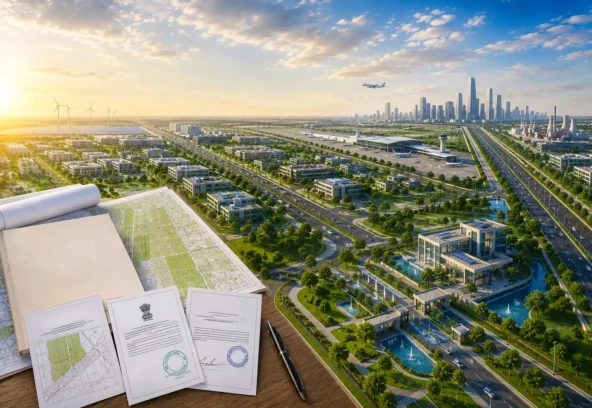
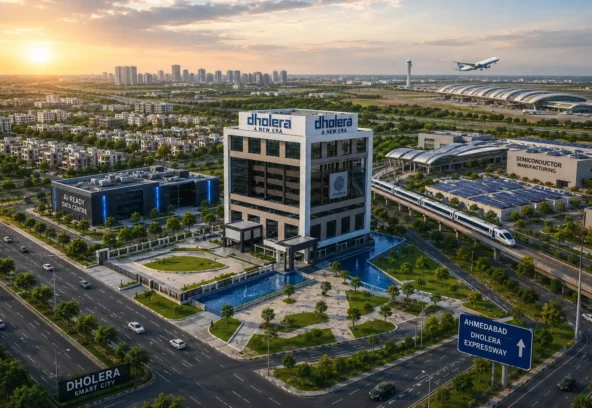
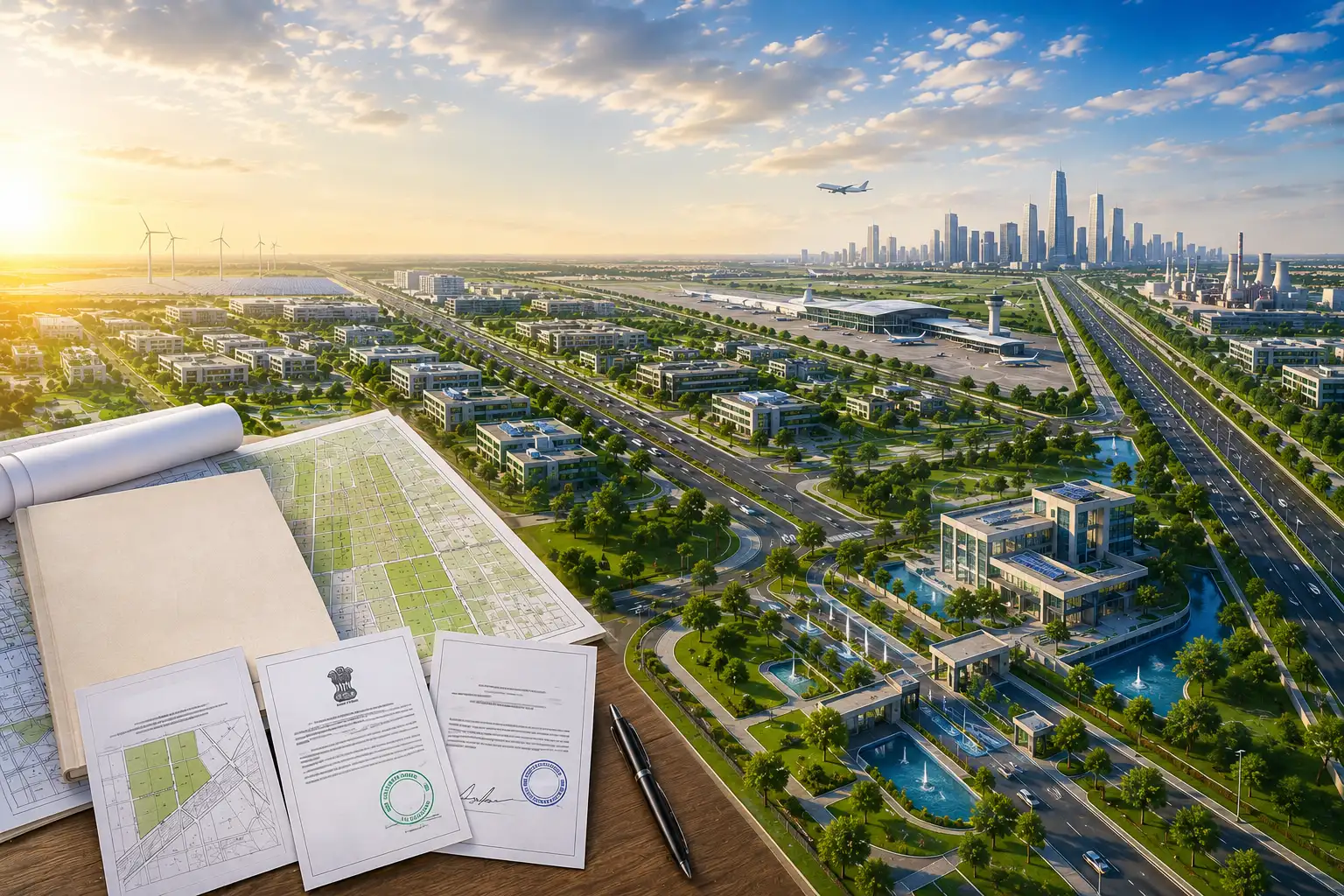
Dholera Special Investment Region (Dholera SIR) has become one of India’s most talked-about smart city developments. Backed by the Government of Gujarat and the Government of India, the project is attracting investors due to its planned infrastructure, upcoming international airport, expressway connectivity, industrial ecosystem, and semiconductor investments.
However, before purchasing any residential, commercial, or industrial plot in Dholera SIR, one term every buyer must understand is the Town Planning (TP) Scheme.
Many developers mention TP numbers like TP1, TP2, Final Plot (FP), NA Order, and DSIRDA Approval during sales discussions, but very few explain what these actually mean and why they are important.
At Future X Developers, we believe every investor deserves complete transparency. Understanding the TP Scheme helps you make informed decisions, reduces legal risks, and ensures your investment is backed by proper government planning.
In this guide, we’ll explain everything you need to know about TP Schemes in Dholera SIR before buying a plot.
What is a TP Scheme?
A Town Planning (TP) Scheme is a government-approved land planning mechanism under the Gujarat Town Planning and Urban Development Act, 1976.
Its primary objective is to transform irregular agricultural land into organized urban land equipped with planned infrastructure.
Instead of acquiring every parcel of land individually, the planning authority pools multiple privately owned agricultural lands, reorganizes them, reserves portions for public infrastructure, and redistributes the remaining land back to owners as properly planned urban plots.
This process creates an organized city rather than allowing unplanned development.
In Dholera SIR, the TP Scheme is implemented by the Dholera Special Investment Region Development Authority (DSIRDA).

Why Was a TP Scheme Required in Dholera?
Before Dholera was selected as India’s first Greenfield Smart City, most of the region consisted of agricultural land.
These lands had:
- Irregular boundaries
- No planned roads
- No underground utilities
- No drainage systems
- No power infrastructure
- No water supply network
- No zoning for residential or industrial development
Developing a global smart city on fragmented agricultural land would have been impossible.
Therefore, DSIRDA introduced Town Planning Schemes to systematically reorganize land while ensuring proper infrastructure development.
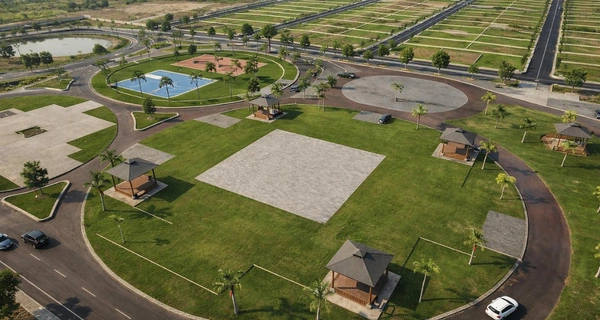
This planning allows roads, utilities, industries, residential sectors, commercial areas, parks, schools, and public spaces to function together as a modern city.
How Does a TP Scheme Work?
The TP Scheme follows a structured legal process.
Step 1: Land Pooling
Agricultural land owned by different individuals within a particular area is pooled together under a Town Planning Scheme.
Step 2: Infrastructure Reservation
A percentage of the pooled land is reserved for:
- Roads
- Parks
- Schools
- Hospitals
- Water pipelines
- Drainage systems
- Utility corridors
- Green belts
- Public facilities
Step 3: Land Reconstitution
The remaining land is redistributed to the original landowners.
Instead of receiving the exact same agricultural plot, owners receive a newly planned Final Plot (FP).
Step 4: Final Plot Allocation
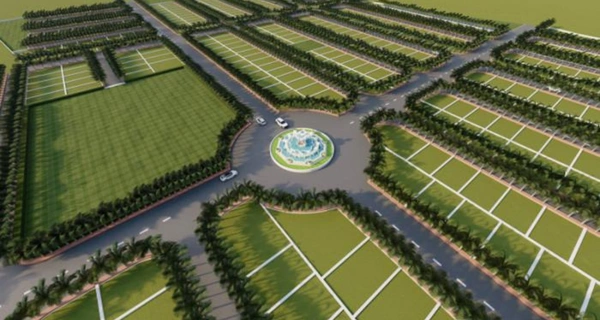
These Final Plots have:
- Clear legal boundaries
- Proper road access
- Urban planning compliance
- Infrastructure connectivity
- Government-approved layouts
Although the Final Plot is usually smaller than the original agricultural holding, its value increases significantly because it becomes development-ready.
TP Schemes in Dholera SIR
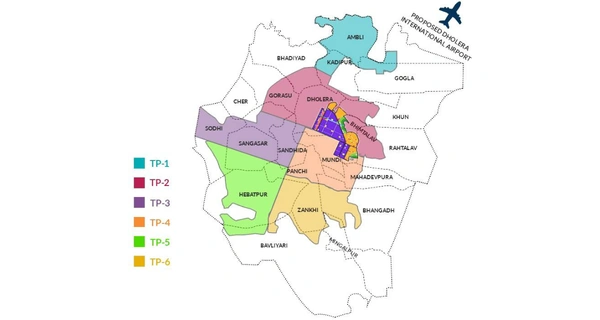
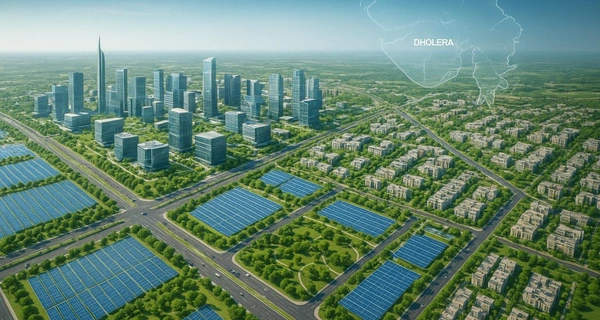
Dholera SIR covers nearly 920 square kilometres and is divided into six major Town Planning Schemes.
Each scheme has a different development objective and infrastructure timeline.
TP1
TP1 includes several residential and knowledge-based development zones.
Key characteristics include:
- Residential planning
- IT and Knowledge Hub
- Green spaces
- Recreational facilities
- Early urban development
Many villages such as Kadipur, Bhadiyad, Ambli, and Gogla fall within this scheme.
TP2 – The Activation Area
TP2 is currently the most developed area of Dholera SIR.
The famous 22.5 sq. km Activation Area is located within TP2.
Infrastructure already developed includes:
- Wide roads
- Underground utilities
- Water supply
- Gas pipelines
- ICT network
- Underground power distribution
The Tata Electronics Semiconductor Plant is also located in this zone, making TP2 one of the most attractive investment locations.
TP3
TP3 is closely linked to the upcoming Dholera International Airport.
The zone supports:
- Airport logistics
- Commercial projects
- Residential developments
- Tourism infrastructure
As airport construction progresses, TP3 is expected to witness increased development activity.
TP4
TP4 is a mixed-use planning zone.
It includes:
- Industrial sectors
- Residential pockets
- Commercial areas
- Expressway-connected developments
Some portions of TP4 are already connected with infrastructure under the Activation Area.
TP5
TP5 has been primarily planned for:
- Heavy industries
- Warehousing
- Logistics parks
- Manufacturing facilities
It is suitable for investors with a longer investment horizon.
TP6
TP6 focuses on renewable energy development.
Major planned activities include:
- Solar power projects
- Wind energy
- Green infrastructure
- Sustainable industrial development
This is among the longest-term development zones within Dholera SIR.
What Does "Sanctioned TP Scheme" Mean?
This is one of the most important aspects every investor should understand.
A TP Scheme goes through multiple legal stages before becoming fully operational.
These include:
- Draft preparation
- Public consultation
- Objection hearings
- Government review
- Final sanction
- Official notification
Only after receiving government sanction does the scheme become legally finalized.
Once sanctioned:
- Final Plot numbers are issued.
- Plot boundaries become fixed.
- Road alignments are finalized.
- Registration becomes legally secure.
- Development permissions become clearer.
Buying land in a sanctioned TP Scheme significantly reduces uncertainty.
What is a Final Plot Number?
A Final Plot (FP) Number is the officially allotted plot number issued after the TP Scheme is completed.
It replaces the original agricultural survey number.
A Final Plot confirms:
- Legal identity of the property
- Fixed boundaries
- Road connectivity
- Approved planning
- Recognition under the TP Scheme
Without a Final Plot number, buyers should carefully verify the legal status of the land.

Understanding NA Order and DSIRDA NOC
Apart from the TP Scheme, two additional documents are extremely important.
NA Order (Non-Agricultural Order)
An NA Order converts agricultural land into legally permitted non-agricultural land.
Without this order:
- Construction may not be legally permitted.
- Registration complications may arise.
- Land continues to retain agricultural status.
DSIRDA NOC
The No Objection Certificate (NOC) issued by DSIRDA confirms that:
- The plot complies with planning regulations.
- The layout meets government norms.
- The property falls within approved planning.
- The transaction is legally acceptable.

Why These Documents Matter
A legally secure plot should ideally have:
- Final Plot Number
- NA Order
- DSIRDA NOC
Together, these documents provide confidence that the plot has been properly planned and approved.
Questions Every Buyer Should Ask
Before paying any booking amount, ask the developer:
- Which TP Scheme does the plot belong to?
- Is the TP Scheme sanctioned?
- Can I see the Final Plot Number?
- Is the NA Order available?
- Is the DSIRDA NOC available?
- Can I verify these documents?
A genuine developer should be willing to provide clear documentation.
Why TP Location Also Influences Investment Potential
Apart from legal clarity, the TP Scheme also affects future appreciation.
For example:
- TP2 benefits from the Activation Area.
- TP1 enjoys proximity to residential and knowledge zones.
- TP3 is expected to gain from airport development.
- TP4 benefits from expressway connectivity.
- TP5 supports industrial expansion.
- TP6 aligns with renewable energy projects.
Therefore, selecting the right TP Scheme should match your investment goals and timeline.
Why Future X Developers Emphasizes Documentation
At Future X Developers, we believe that property investment should always begin with legal verification—not just attractive pricing.
Before recommending any project, we encourage buyers to understand:
- The TP Scheme status
- Final Plot allocation
- NA conversion
- DSIRDA approvals
- Infrastructure development stage
- Connectivity advantages
- Long-term growth potential
Our team assists buyers in understanding every document and provides complete guidance throughout the purchase process, helping investors make informed decisions with greater confidence.
Conclusion
Dholera SIR represents one of India’s largest planned urban developments, but every smart investment begins with understanding the legal framework behind the land.
A TP Scheme is not just a planning term—it forms the legal and infrastructural foundation of every plot in Dholera.
Before investing, ensure that the property has:
- A sanctioned TP Scheme
- A Final Plot Number
- An NA Order
- A DSIRDA NOC
Combined with strategic location advantages such as the Ahmedabad–Dholera Expressway, Dholera International Airport, industrial corridors, and upcoming manufacturing hubs, these legal essentials provide the confidence needed for a secure long-term investment.
Taking the time to verify these fundamentals today can help protect your investment and position you to benefit from Dholera SIR’s future growth.
Future X Developers
Future X Developers is helping investors explore opportunities near Dholera Smart City with future-ready plotted developments and strategic investment options. With the rapid growth of infrastructure, tourism, and industrial projects around Lothal and Dholera, the region is emerging as one of the most promising destinations for long-term growth and development.
FAQ
1. What is a TP Scheme in Dholera SIR?
A TP Scheme is a government-approved Town Planning mechanism that reorganizes agricultural land into planned urban plots with proper infrastructure.
2. What is a Final Plot Number?
A Final Plot Number is the official plot number allotted after land reconstitution under a sanctioned TP Scheme.
3. Why is a sanctioned TP Scheme important?
It confirms legal plot boundaries, road access, approved planning, and reduces future ownership uncertainties.
4. What is an NA Order?
An NA (Non-Agricultural) Order is government approval converting agricultural land into non-agricultural land suitable for urban development.
5. What is a DSIRDA NOC?
A DSIRDA No Objection Certificate confirms that the plot complies with planning regulations and is approved for development and registration.